
Garage Door Repair: DIY vs Professional
By the team at South Bend Garage Door Repair | Updated 2026
Reviewed by Mike Harrington, Lead Garage Door Technician at South Bend Garage Door Repair.
Mike has over 14 years of field experience servicing Genie, LiftMaster, and Chamberlain garage door systems across St. Joseph County and the surrounding Michiana area.
Table of Contents
- Quick Answer
- DIY-Safe Tasks
- Professional-Only Repairs
- The Real Cost of a DIY Mistake
- Why the Divide Comes Down to Tension and Weight
- Component-by-Component Guide
- Frequently Asked Questions
DIY garage door repair is safe and reasonable for tasks like lubrication, hardware tightening, and safety sensor testing. It becomes genuinely dangerous once springs, cables, off track components, or opener internals are involved, since these parts operate under high tension or electrical load that can cause serious injury if mishandled. Here’s a clear breakdown of what’s safe to handle yourself and what should always go to a professional.
Quick Answer
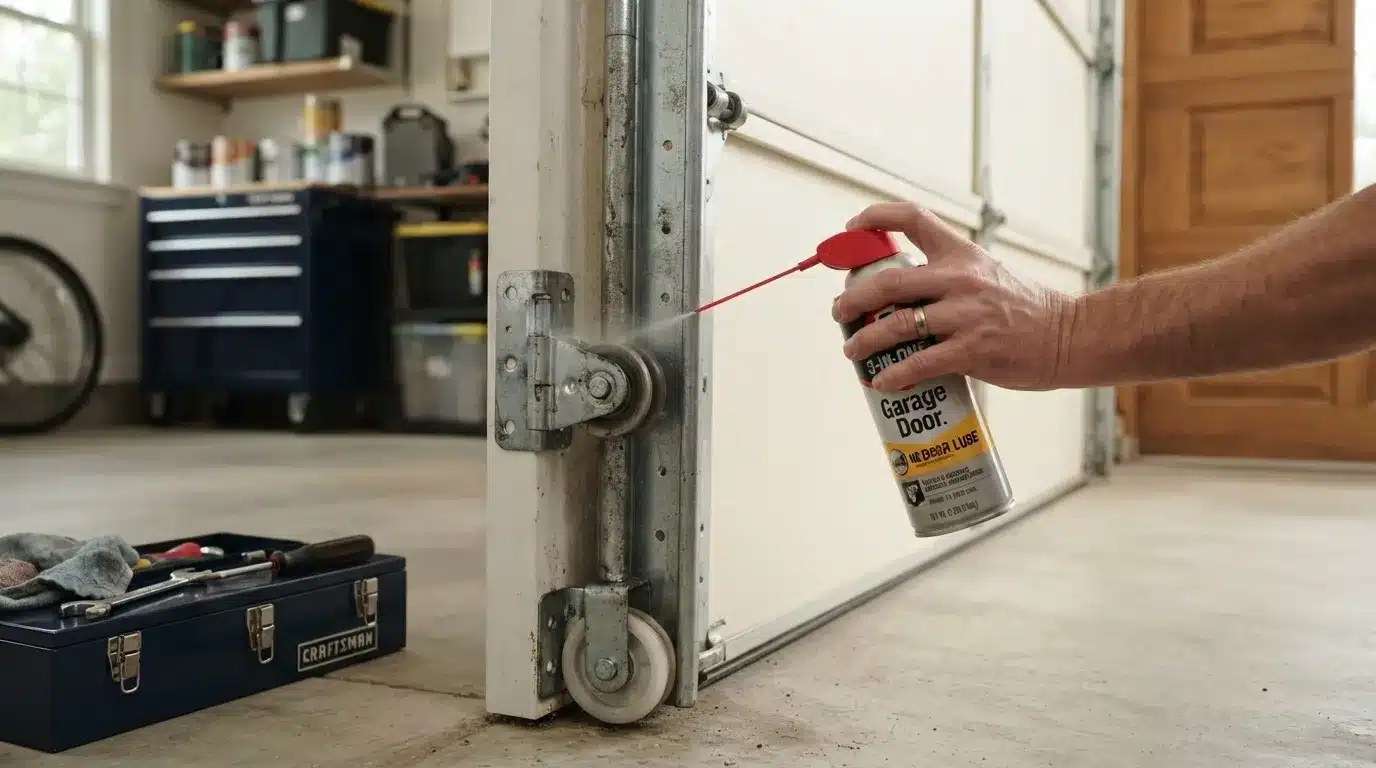
Safe for DIY: lubrication, hardware tightening, track cleaning, weatherstripping, remote battery replacement, and the auto-reverse safety test. Professional-only: springs, cables, off track rollers, panel replacement, opener wiring and internals, and track alignment.
DIY-Safe Tasks
| Task | Why It’s Safe |
|---|---|
| Lubricating rollers, hinges, tracks | No tension or weight involved |
| Tightening visible hardware | Simple mechanical task, low risk |
| Testing the auto-reverse safety feature | Observation only, no parts touched |
| Replacing remote batteries | No mechanical risk |
| Cleaning safety sensor lenses | No tension or electrical exposure |
Professional-Only Repairs
| Repair | Why It Requires a Professional |
|---|---|
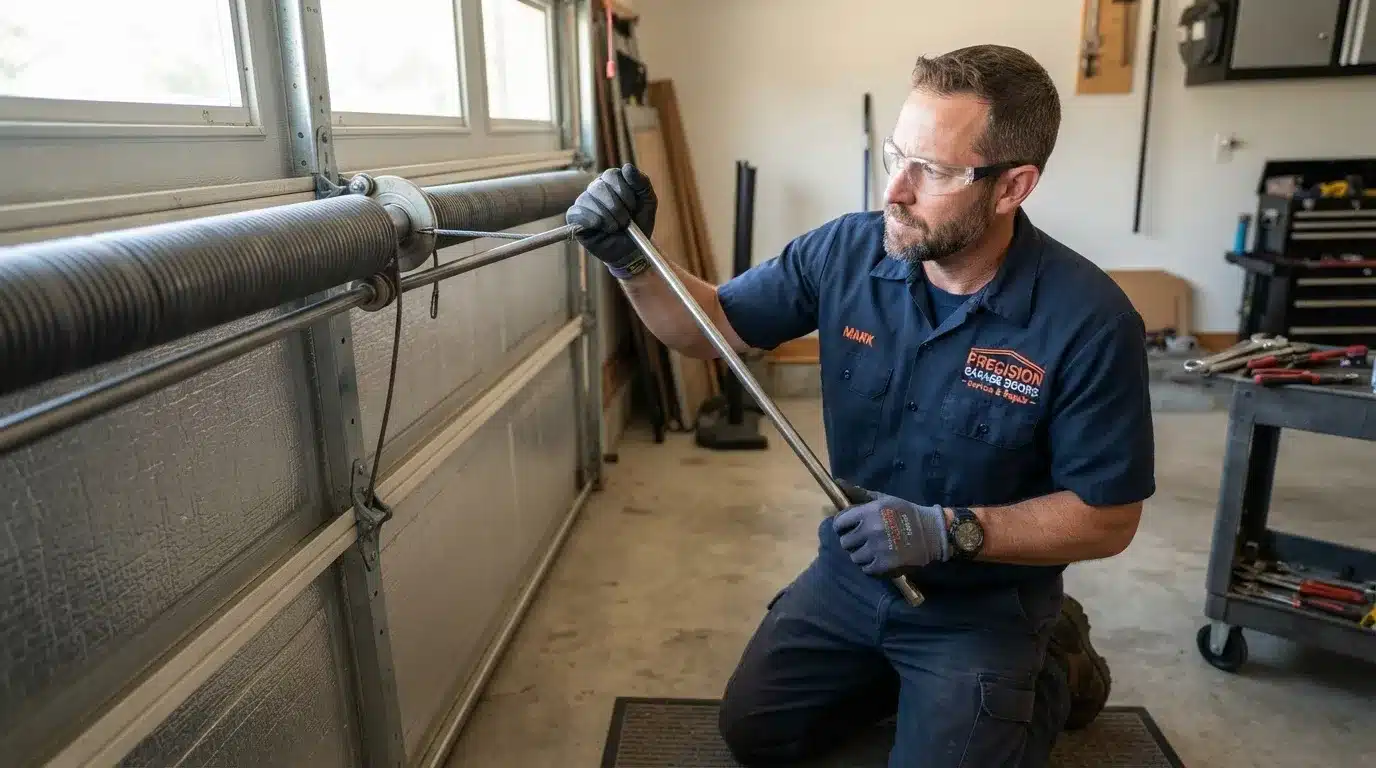
| Spring repair or replacement | Stores enough tension to cause serious injury |
| Cable repair | Works under tension alongside springs |
| Off track rollers or panels | Door can shift or fall unexpectedly |
| Opener internals and wiring | Electrical risk, complex calibration |
| Track alignment | Affects overall door balance and safety |
The Real Cost of a DIY Mistake
DIY repairs can save money on simple tasks, but a mistake on a high risk component often costs far more than the professional repair would have. Attempting to fix a spring yourself might seem like it saves fifty dollars in parts, but a mistake can easily turn into a much larger professional repair bill afterward, and in a worst case scenario, a serious injury requiring emergency medical care.
This is the core reasoning behind why we’ve consistently flagged springs and cables as professional-only across our guides. Our detailed breakdown on signs you need garage door spring repair covers exactly why this component carries such outsized risk compared to almost anything else on the door.
Why the Divide Comes Down to Tension and Weight
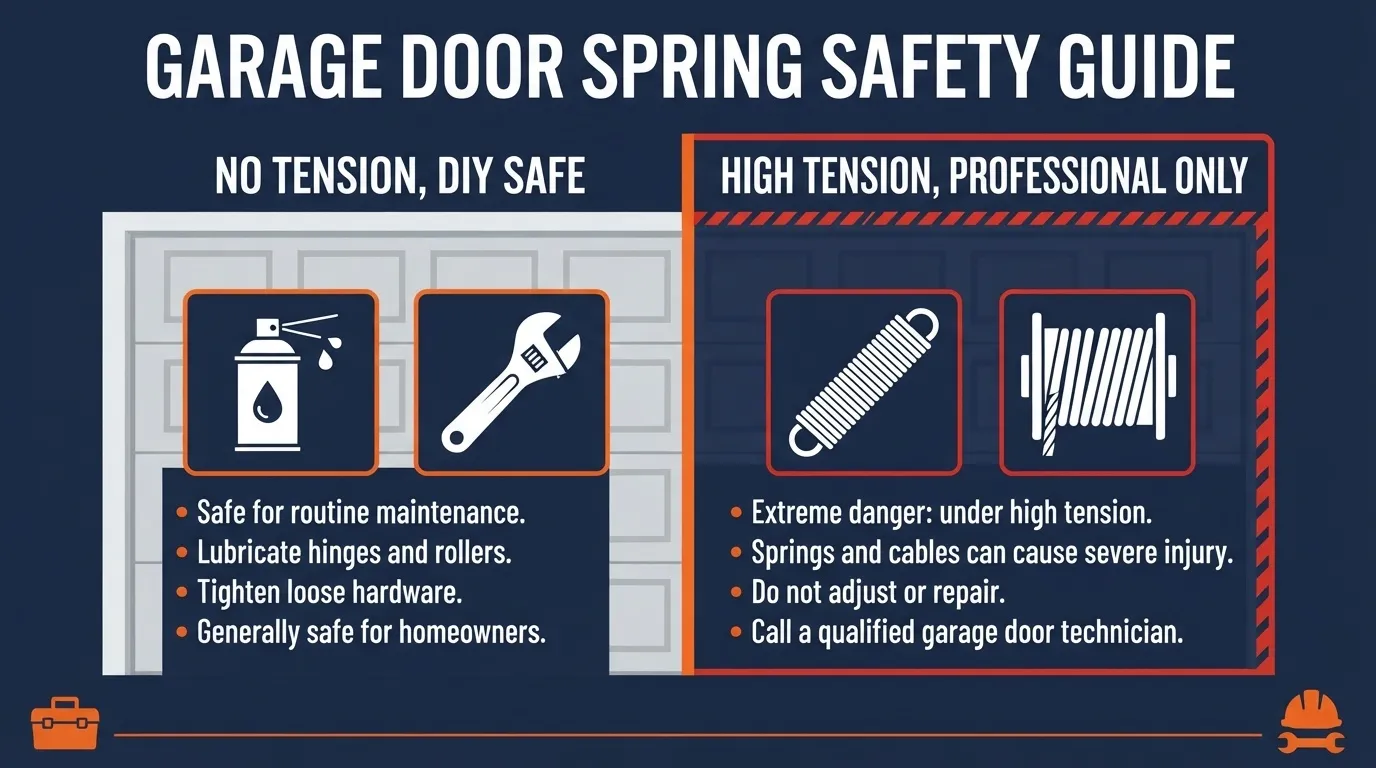
A standard residential garage door weighs 150 to 400 pounds, and springs are what counterbalance that weight so an opener or a person can lift it. Any component connected to that tension system, springs, cables, and the mechanisms they attach to, carries real risk if mishandled. Components without tension, like lubrication points, hardware, and sensors, don’t carry that same risk.
This is a useful mental shortcut. Before attempting any repair, ask whether the part is under tension or supporting the door’s weight. If yes, it belongs to a professional.
Component-by-Component Guide
If you’re trying to figure out where a specific problem falls, our component-specific guides cover the details. Cable repair and springs both fall firmly in professional-only territory. Roller replacement is a partial exception, safe away from the bottom bracket but risky near it. Opener replacement is actually one of the more DIY-friendly major repairs, since it doesn’t involve the same tension risk as springs or cables.
Frequently Asked Questions
Can I fix my garage door myself?
Basic maintenance like lubrication, hardware tightening, and safety testing is safe to do yourself. Repairs involving springs, cables, or opener internals should always go to a professional.
What’s the difference between DIY and professional garage door repair?
The main difference comes down to tension and weight. Tasks with no tension involved are generally safe for homeowners, while anything connected to the spring or cable system carries real injury risk.
When should I hire a garage door professional?
Hire a professional any time a repair involves springs, cables, off track components, opener wiring, or track alignment, or any time you’re unsure what’s actually causing a problem.
Conclusion
The line between DIY garage door repair and professional work isn’t about skill level, it’s about tension and weight. Lubrication, hardware tightening, and basic maintenance are genuinely safe for most homeowners. Springs, cables, and anything connected to the door’s counterbalance system are not, regardless of how confident you feel with tools. If you’re unsure which category your repair falls into, our garage door repair South Bend team can give you an honest answer before you risk injury or a bigger repair bill.