
Garage Door Stuck Halfway? Here’s What to Do Right Now
By the team at South Bend Garage Door Repair | Updated 2026
Reviewed by Mike Harrington, Lead Garage Door Technician at South Bend Garage Door Repair.
Mike has over 14 years of field experience servicing Genie, LiftMaster, and Chamberlain garage door systems across St. Joseph County and the surrounding Michiana area.
Table of Contents
- Is It Safe to Leave It Stuck
- Can You Open It Manually
- Dirty or Blocked Tracks
- Bent or Damaged Tracks
- Worn or Dry Rollers
- Broken or Worn Springs
- Damaged or Misaligned Cables
- Travel Limit or Force Settings Are Off
- Test the Door’s Balance
- Weak or Aging Opener Motor
- When to Call a Professional
- Frequently Asked Questions
A garage door stuck halfway is usually caused by dirty or blocked tracks, worn rollers, a failing spring, or an opener setting that’s out of adjustment. Before anything else, it helps to know whether it’s safe to leave the door where it is and whether you can move it manually. This guide covers both, then walks through every likely cause from simplest to most serious.
Is It Safe to Leave It Stuck
A door stuck halfway open leaves your garage exposed to weather, pests, and anyone walking by. It’s not an emergency in most cases, but it shouldn’t be left overnight or for an extended period if you can help it.
If you can’t resolve it quickly using the steps below, closing off the opening temporarily and addressing it the same day is the safer approach until a technician can take a look.
Can You Open It Manually
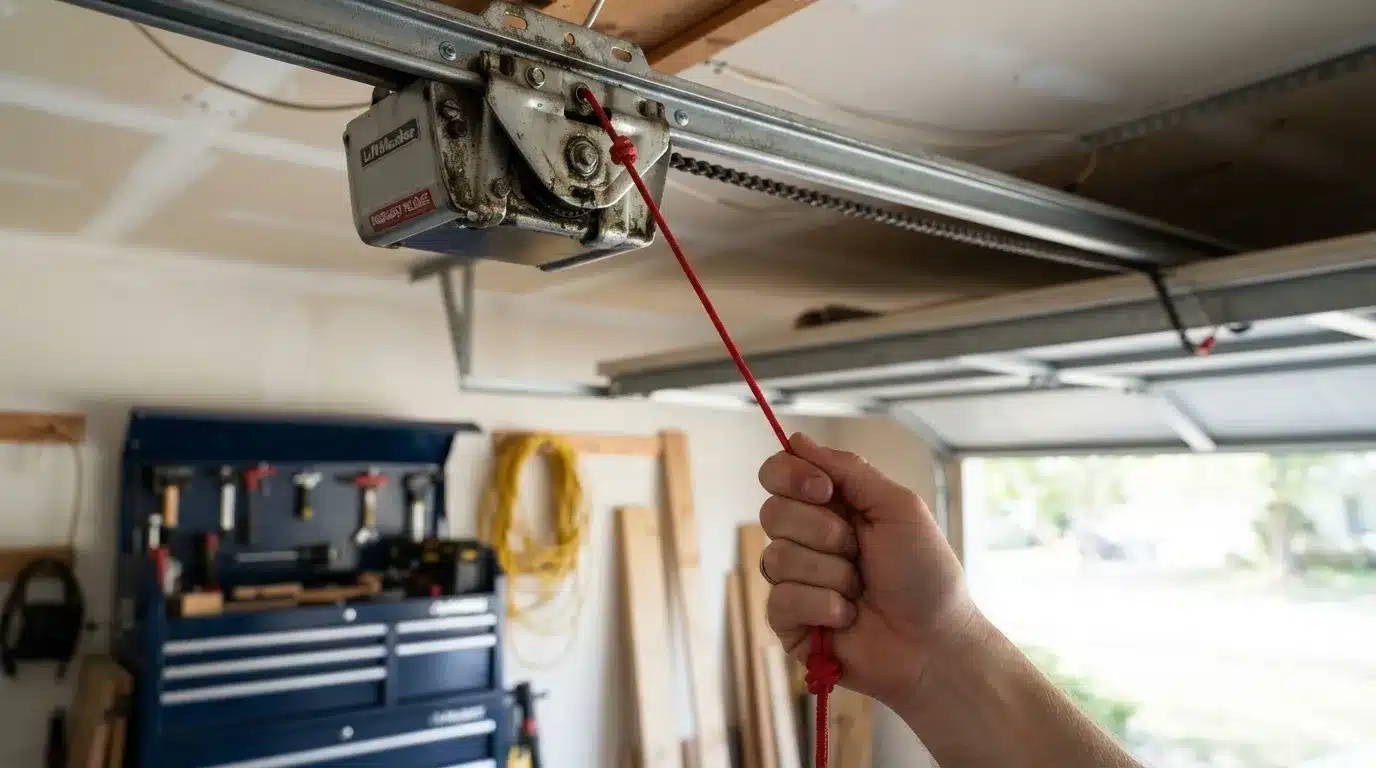
Most garage door openers have an emergency release cord, usually a red handle hanging from the trolley on the ceiling track. Pulling this disconnects the door from the opener, allowing you to move it by hand.
Once disconnected, lift or lower the door slowly and evenly, using both hands if possible. If the door feels unusually heavy, resists movement, or moves unevenly on one side, stop immediately. That resistance is often a sign of a spring or cable problem, and forcing it further can cause injury or damage.
If the door moves smoothly and stays in place once manually released, reconnect the opener by pulling the release cord again and pressing it back until it engages with the trolley.
Dirty or Blocked Tracks
This is the most common and easiest cause to check. Dirt, grease buildup, or small debris in the tracks can create enough resistance to stop the door mid travel.
Inspect both tracks with a flashlight for anything visible, then wipe them down with a cloth and a garage door safe cleaner. Avoid using heavy grease, since it attracts more dirt over time. A light silicone based lubricant on the rollers and track is usually enough to keep things moving smoothly.
Bent or Damaged Tracks
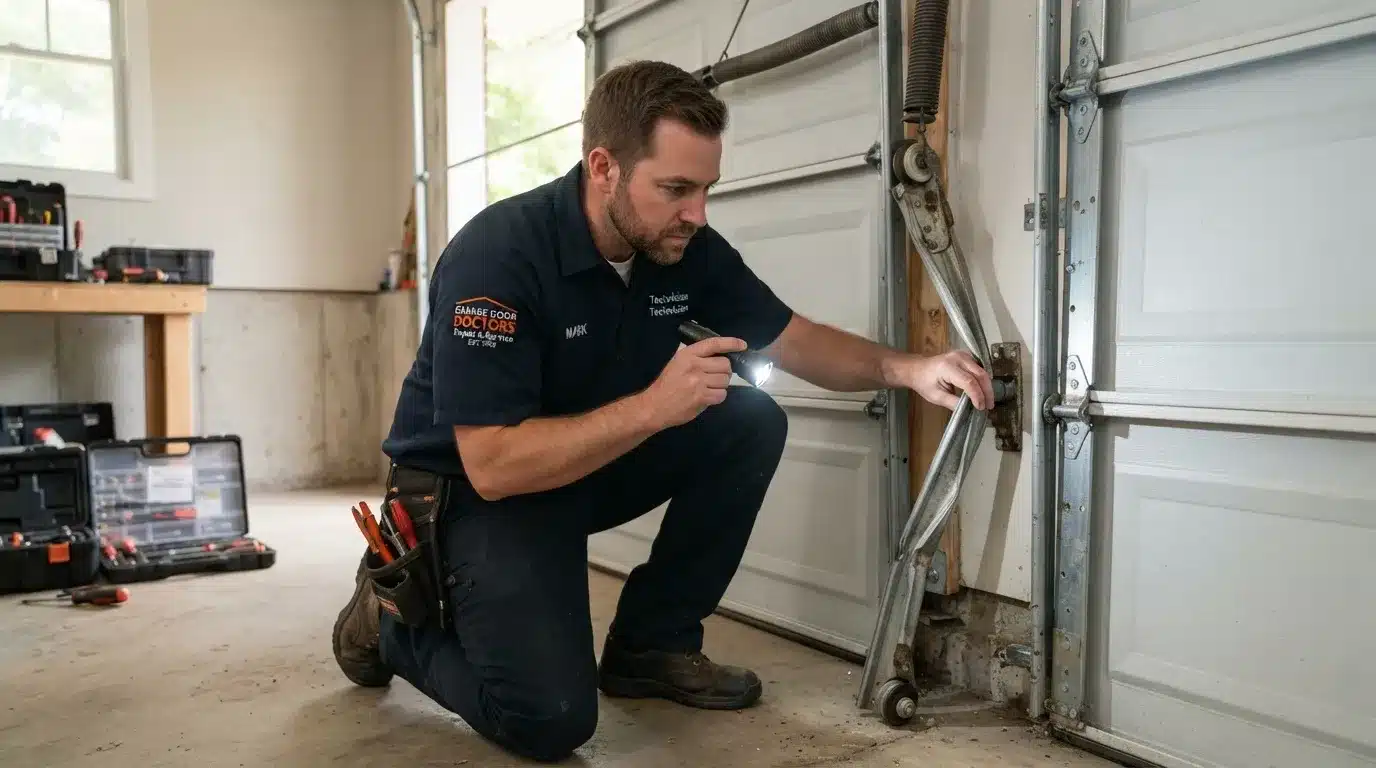
If the tracks themselves are bent, dented, or misaligned, no amount of cleaning will fix a garage door stuck halfway. A bent track creates a physical obstruction that the rollers can’t pass smoothly.
This isn’t a safe DIY repair, since forcing the door through a damaged section can bend the track further or pull it loose from the wall. Our garage door track repair service can realign or replace a damaged section safely.
Worn or Dry Rollers
Rollers guide the door along the tracks, and over time they can dry out, crack, or wear unevenly. This creates friction that can cause the door to stop or jerk partway through its travel.
Lubricating the rollers with a silicone based spray is a simple maintenance step that often resolves minor sticking. If a roller looks visibly cracked or worn down, it’s worth having it inspected, since a failing roller can eventually come off the track entirely.
Broken or Worn Springs
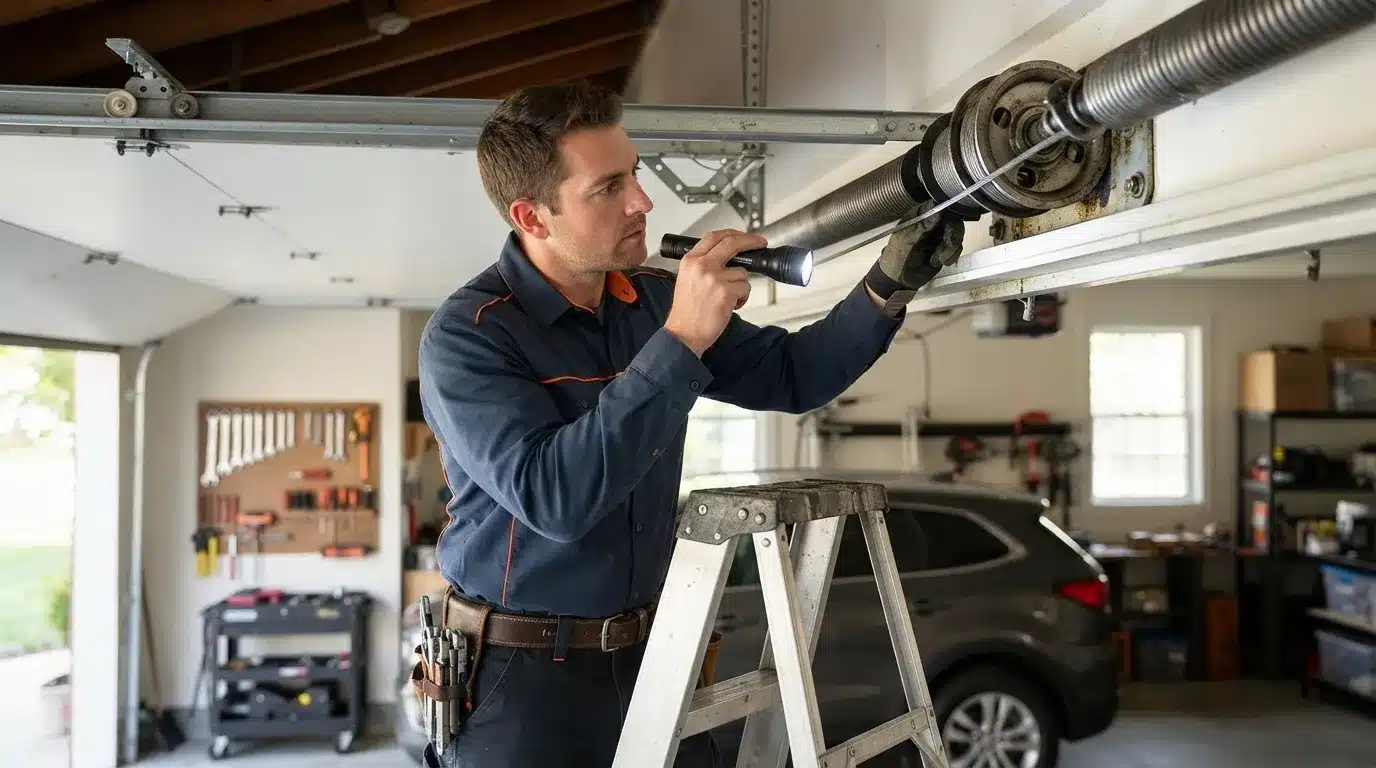
Springs counterbalance the weight of the door, and a weakened or broken spring is one of the more serious reasons a garage door gets stuck halfway. Without proper spring tension, the opener has to work harder to lift the door, and it may not have enough force to finish the job.
Garage door springs are under extreme tension and should never be adjusted or replaced without proper training. If you notice a gap in the coil, uneven movement, or the door feels unusually heavy when moved manually, our guide on signs you need garage door spring repair covers what to look for.
Damaged or Misaligned Cables
Cables work alongside the springs to support the door’s weight. A frayed, loose, or broken cable can cause the door to hang unevenly or stop partway, often with one side higher than the other.
Like springs, cables are under significant tension and require professional handling. According to the Door and Access Systems Manufacturers Association, high tension components like springs and cables should always be left to qualified technicians due to the injury risk involved.
Travel Limit or Force Settings Are Off
Garage door openers have internal settings that control how far the door travels and how much resistance it takes before stopping. If the travel limit is set too short, the opener may think the door has reached its full open position when it’s only partway up.
This is the same type of setting issue covered in our guide on a garage door won’t close, just affecting the opening cycle instead of closing. Adjusting these settings usually involves small dials or buttons on the opener unit, and getting them wrong can affect the door’s safety reversal function, so this is often best handled by a technician.
Test the Door’s Balance
Here’s a simple way to check if your door is properly balanced. With the opener disconnected using the emergency release, manually open the door about halfway and let go. A properly balanced door should stay in place on its own.
If it drifts down or springs upward when released, the springs are likely out of adjustment or worn. This test alone can confirm whether the root cause is mechanical balance rather than the opener itself.
Weak or Aging Opener Motor
Older openers can lose torque over time, especially if they’re straining against added resistance from worn rollers or an unbalanced door. A motor that’s losing power may lift the door partway, then stall.
If you’ve ruled out tracks, rollers, springs, and cables, and the door still stops halfway, the opener motor itself may need inspection or replacement.
When to Call a Professional
Some causes here are simple to check yourself. Others involve high tension components or precise settings that carry real risk if handled incorrectly.
Safe to try yourself: cleaning tracks, lubricating rollers, testing the door’s balance, using the manual release cord carefully.
Best left to a professional: repairing bent tracks, replacing springs or cables, adjusting travel limit and force settings, diagnosing a weak opener motor.
Frequently Asked Questions
Garage door stuck won’t open manually, what should I do?
If the door won’t budge even after pulling the emergency release cord, stop and don’t force it. This often points to a broken spring or cable, both of which require professional repair.
Why is my garage door getting stuck on the track?
This is usually caused by dirt or debris buildup, worn rollers, or a bent section of track. Start by inspecting and cleaning the track before assuming it needs replacement.
My garage door is not opening but the motor is running, what does that mean?
This often points to a disconnected trolley, worn drive gear, or a door that’s too heavy for the motor to lift due to a spring issue. It’s a sign the opener and the door mechanism aren’t properly connected or balanced.
Conclusion
A garage door stuck halfway almost always has an identifiable cause, ranging from simple track debris to a more serious spring or cable issue. Starting with the manual release and a quick balance test will usually point you in the right direction. If the cause turns out to involve springs, cables, or opener settings, those are worth leaving to a professional rather than risking injury or further damage. Our garage door opener repair team can diagnose the exact issue and get your door moving safely again.