Wood vs Steel Garage Doors: Which Should You Choose
By the team at South Bend Garage Door Repair | Updated 2026
Reviewed by Mike Harrington, Lead Garage Door Technician at South Bend Garage Door Repair.
Mike has over 14 years of field experience servicing Genie, LiftMaster, and Chamberlain garage door systems across St. Joseph County and the surrounding Michiana area.
Table of Contents
- Quick Answer
- Wood vs Steel Garage Doors Comparison Table
- Steel Garage Doors
- Wood Garage Doors
- Faux Wood Steel: The Middle Ground
- Cost Comparison
- Home Value Impact
- Which Is Better for Michiana Winters
- How to Decide: A Simple Framework
- Frequently Asked Questions
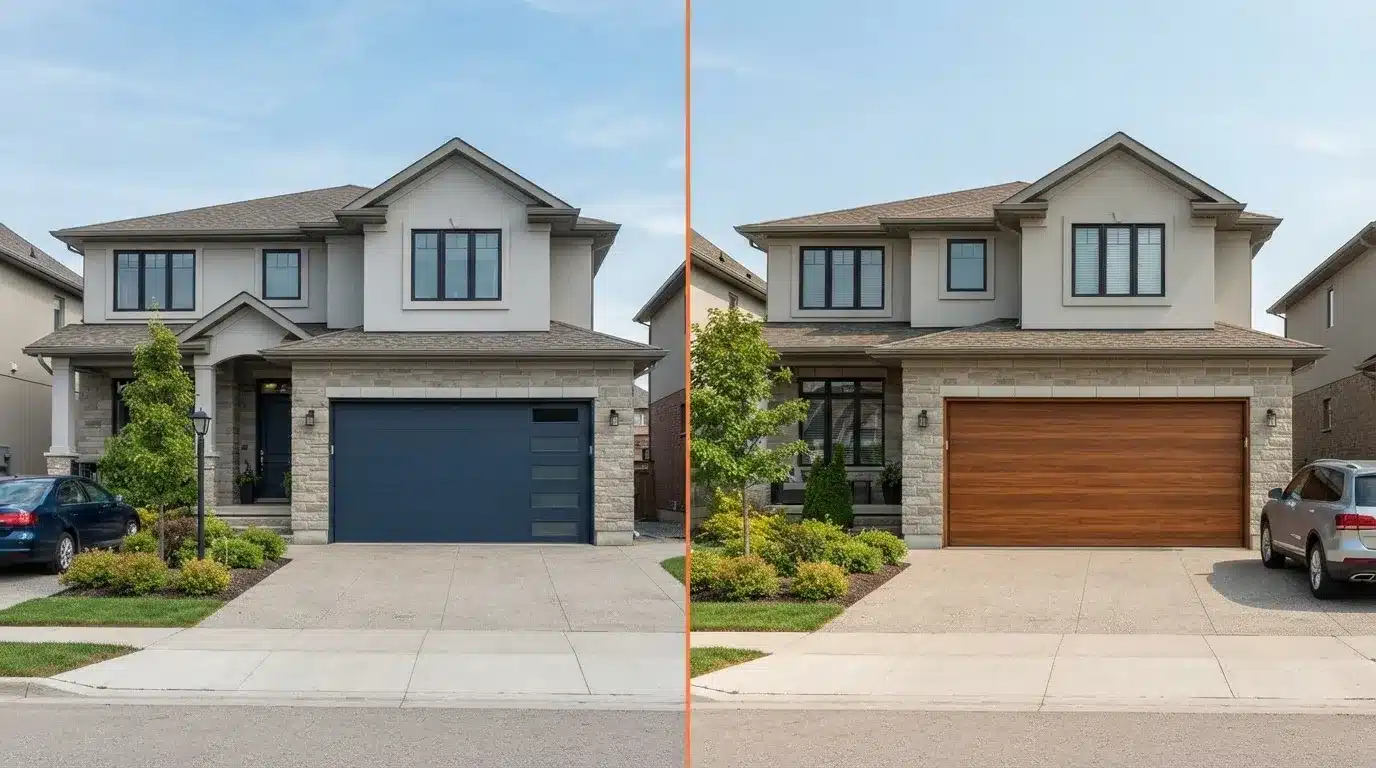
When comparing wood vs steel garage doors, steel wins on durability, insulation, and low maintenance, while wood wins on natural appearance and customization. The right choice mostly comes down to your climate, your budget, and how much upkeep you’re willing to do over the years. This guide breaks down both materials in detail, plus a simple framework to help you land on the right answer for your home.
Quick Answer
If you want the most practical, lowest maintenance option that holds up well through Midwest winters, steel is the better choice for most homeowners. If curb appeal and a natural, custom look matter more than upkeep, wood remains the premium option, especially in drier, more moderate climates.
Wood vs Steel Garage Doors Comparison Table
| Factor | Steel | Wood |
|---|---|---|
| Durability | 25 to 30 years | 15 to 25 years with upkeep |
| Maintenance | Minimal | High, regular refinishing |
| Insulation (R-value) | R-6 to R-18 | R-4 to R-8 |
| Cold Climate Performance | Excellent | Prone to warping |
| Curb Appeal | Good to excellent | Excellent, natural look |
| Customization | Limited | Nearly unlimited |
Steel Garage Doors
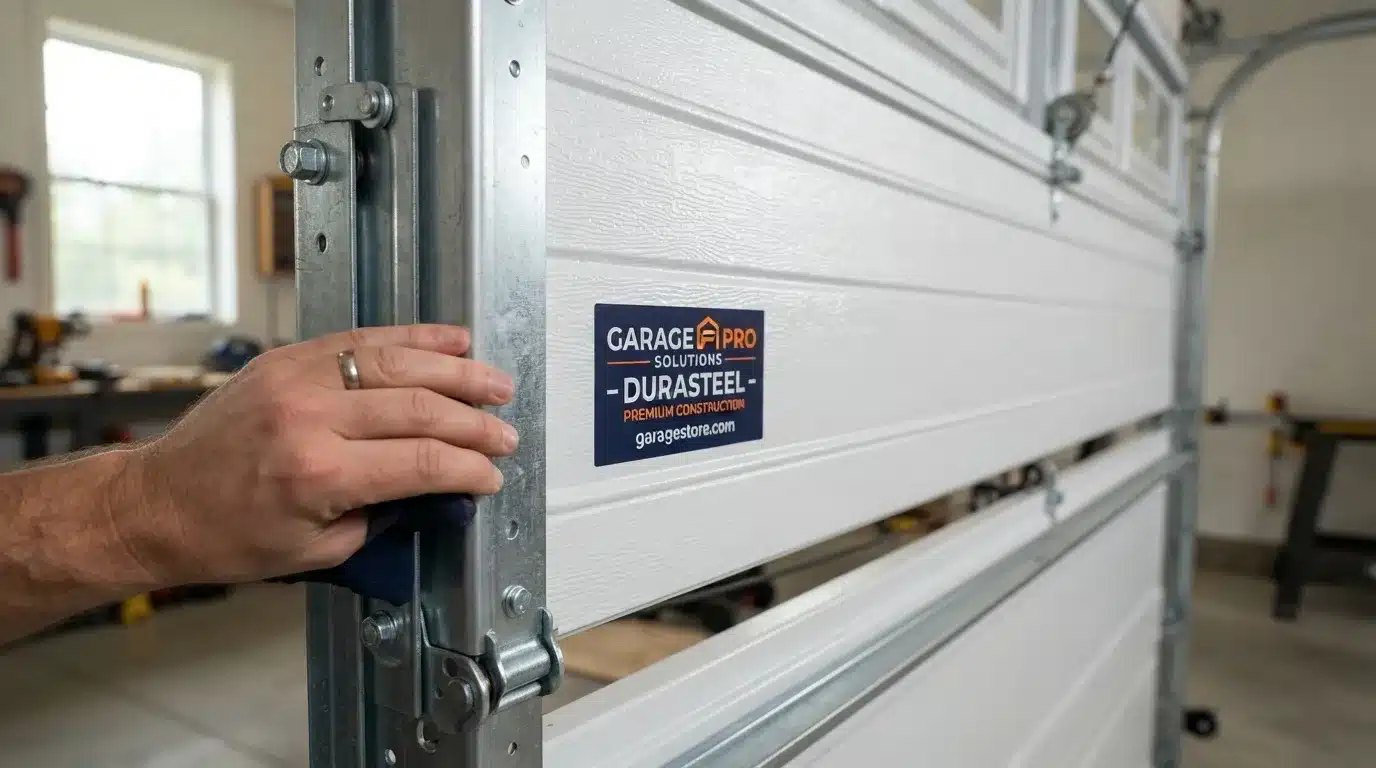
Steel is the most common garage door material for good reason. It resists warping, dents less than most people expect, and holds up across every climate type without special care.
Steel doors come in different gauges, which is really just a way of describing thickness. Thicker gauge steel resists dents better and tends to last closer to the full 25 to 30 year range, while thinner gauge steel costs less upfront but shows dents and wear sooner.
Steel Gauge Comparison
| Gauge | Thickness | Dent Resistance | Best For |
|---|---|---|---|
| 24 | Thickest | Excellent | High traffic driveways, long term durability |
| 25 | Thick | Very good | Most homeowners |
| 26 | Medium | Good | Budget conscious replacements |
| 27+ | Thinnest | Fair | Not generally recommended |
For most homeowners expecting a door to last 20 years or more, 24 or 25 gauge steel is the sweet spot between cost and long term performance.
Insulation is where steel really pulls ahead. Polyurethane insulated steel doors reach R-values of 12 to 18, meaning they do a genuinely good job keeping outside temperature swings from affecting your garage. Non-insulated steel sits at R-0, so insulation level matters a lot more than the base material when comparing energy performance.
Steel is also available in nearly any style, from traditional raised panels to flush modern designs, carriage style profiles, and even faux wood finishes, which we’ll cover shortly.
Wood Garage Doors
Wood offers something steel simply can’t replicate, a genuinely natural material with real grain, depth, and warmth. For homeowners prioritizing appearance above all else, wood remains the gold standard.
Wood Species Comparison
| Species | Character | Durability | Price Tier |
|---|---|---|---|
| Cedar | Red-brown, tight grain | Excellent, naturally rot resistant | Mid range |
| Redwood | Deep red, striking grain | Excellent | Premium |
| Hemlock | Light, uniform | Good with proper treatment | Budget friendly |
| Mahogany | Dark, luxurious | Excellent | High end, custom |
Each species brings a different look and a different price point, with premium options like redwood and mahogany costing meaningfully more than standard cedar or hemlock. Customization is wood’s biggest advantage overall. Custom panel configurations, carved details, matched staining to existing trim, and nonstandard sizing are all realistic with wood in a way they simply aren’t with mass produced steel doors.
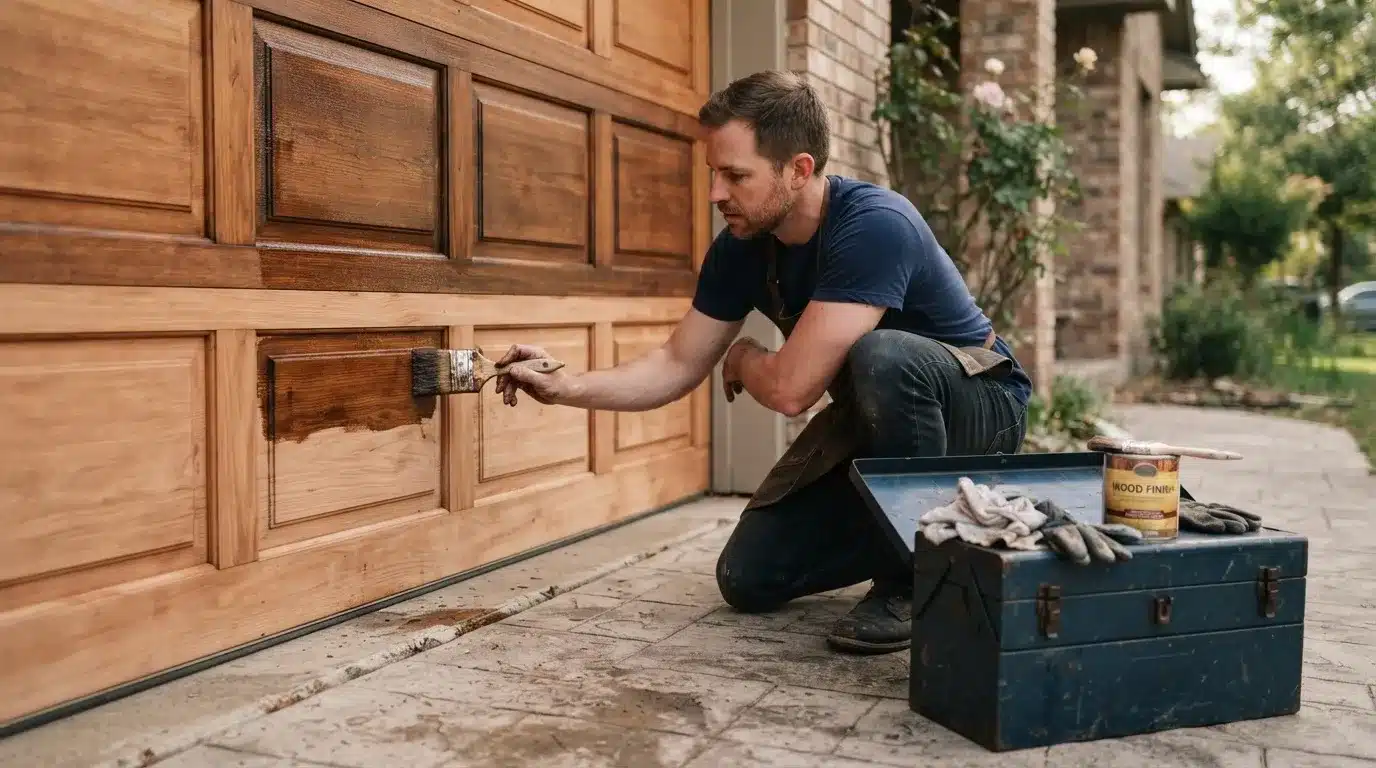
The tradeoff is maintenance. Wood needs regular attention to hold up.
Wood Garage Door Maintenance Calendar
Every 6 months: Inspect for cracking, peeling finish, or early signs of moisture damage, especially around panel seams.
Annually: Clean the surface and touch up any small chips or scratches in the finish before they spread.
Every 2 to 3 years: Full refinishing, restaining or repainting, is typically needed to keep wood protected from moisture and UV exposure.
Skipping this schedule is the single biggest reason wood doors underperform their expected lifespan, especially in climates with real seasonal swings.
Faux Wood Steel: The Middle Ground
If you like the idea of wood but not the maintenance, faux wood steel is worth serious consideration. These are steel doors manufactured with a wood grain textured finish that convincingly mimics real wood from normal viewing distance, including from the street.
You get steel’s durability, insulation, and low maintenance, combined with a look that satisfies most homeowners who were originally drawn to wood for its appearance. This is also a common answer for homeowners in an HOA that requires a wood look but doesn’t specify the actual material.
Cost Comparison
Pricing for wood vs steel garage doors varies by size, insulation level, and finish quality, but the gap between the two materials is significant and consistent across sources.
| Door Type | Single Car | Two Car |
|---|---|---|
| Steel, standard insulated | $1,800 to $4,000 | $3,000 to $6,000 |
| Steel, premium insulated | $2,000 to $5,000 | $3,500 to $8,000 |
| Faux wood steel | $2,500 to $6,500 | $4,500 to $9,000 |
| Wood, standard species | $3,000 to $8,000 | $6,000 to $12,000 |
| Wood, premium or custom | $6,000 to $12,000 | $10,000 to $18,000+ |
Upfront price only tells part of the story. Wood also carries ongoing refinishing costs, typically $150 to $400 per year in basic upkeep, plus $400 to $800 for professional refinishing every 2 to 3 years. Factor this in over a 15 to 20 year period, and steel’s total cost of ownership is almost always lower, even though wood’s sticker price advantage sometimes looks smaller at first.
Home Value Impact
Garage doors are one of the few home improvements known to return close to their full cost in added home value, making the material choice worth thinking about beyond personal preference alone.
Steel doors with a well matched design generally deliver strong return on investment for most homes, since buyers respond well to a clean, well maintained appearance regardless of material. Wood tends to add the most additional value in higher end or historic neighborhoods, where an authentic wood door reinforces the character buyers are specifically looking for. For a typical suburban home in the Michiana area, a quality steel or faux wood steel door usually offers the best combination of upfront value and long term appeal.
Which Is Better for Michiana Winters
South Bend and the surrounding Michiana area see real freeze thaw cycles every winter, and this matters more for garage doors than most homeowners expect.
Wood absorbs moisture. When temperatures swing from freezing to above freezing repeatedly, wood expands and contracts, and that repeated movement is what causes cracking, warping, and eventually rot around panel seams. A wood door that would perform beautifully in a dry, mild climate can show real wear within a few Michiana winters if maintenance slips even slightly.
Steel doesn’t have this problem. It doesn’t absorb moisture, and insulated steel actively helps keep the garage warmer, which reduces the temperature swing your door itself has to handle. For homeowners in our service area, insulated steel is consistently the more practical long term choice, particularly for an attached garage where interior temperature affects the rest of the home.
According to the U.S. Department of Energy, proper insulation in attached structures like garages can meaningfully reduce heat loss into the home, reinforcing why insulated steel tends to make more sense in a climate like ours.
How to Decide: A Simple Framework
Answer these three questions in order, and you’ll land on the right material for your situation.
First, how important is low maintenance to you? If you don’t want to think about refinishing every few years, steel or faux wood steel is the clear answer. If you enjoy home upkeep and want an authentic material, wood stays on the table.
Second, what’s your climate like? In a climate with real winters and freeze thaw cycles, like ours, steel holds up significantly better long term. In a dry, moderate climate, wood performs much closer to its full potential.
Third, what’s your budget, including the next 10 to 15 years? If you’re comparing sticker price alone, wood and steel can look closer than they really are. Once you factor in wood’s ongoing refinishing costs, steel is almost always the better value over time, even when its upfront price is similar.
If you’ve worked through these three questions and steel or faux wood steel comes out ahead, our garage door installation team can help you find the right fit. For a broader look at every available option, our guide to types of garage doors covers styles and materials beyond just wood and steel.
Frequently Asked Questions
Which is better, steel doors or wooden doors?
Steel is better for most homeowners due to lower maintenance, better insulation, and stronger performance in cold or humid climates. Wood is better specifically for appearance and customization, particularly in dry, moderate climates.
What are the downsides of wooden garage doors?
Wood requires regular refinishing, is prone to warping and cracking in climates with significant temperature swings, and generally costs more upfront and over time than steel.
Is a wood or steel garage door cheaper?
Steel is cheaper both upfront and over time. A standard two car steel door typically runs $3,000 to $6,000, while a comparable wood door runs $6,000 to $12,000 or more, before factoring in wood’s ongoing maintenance costs.
Can steel garage doors look like wood?
Yes. Faux wood steel doors use a textured, wood grain finish that closely resembles real wood from typical viewing distance, while still offering steel’s durability and low maintenance.
Conclusion
When it comes to wood vs steel garage doors, steel is the more practical choice for the vast majority of homeowners, especially in a climate like Michiana’s, where freeze thaw cycles are hard on wood over time. Wood still has a place for homeowners who prioritize a natural, custom look and are willing to commit to regular maintenance. If you’re still unsure, faux wood steel offers a genuine middle ground worth considering. Whichever direction fits your home, our team can walk you through the options and handle the installation from start to finish.