
Garage Door Lifespan by Material: What to Expect
By the team at South Bend Garage Door Repair | Updated 2026
Reviewed by Mike Harrington, Lead Garage Door Technician at South Bend Garage Door Repair.
Mike has over 14 years of field experience servicing Genie, LiftMaster, and Chamberlain garage door systems across St. Joseph County and the surrounding Michiana area.
Table of Contents
- Average Garage Door Lifespan by Material
- Why the Numbers Vary So Much
- What Actually Affects Your Door’s Lifespan
- It’s Not Just the Door
- Garage Door Lifespan in Michiana
- Signs Your Garage Door Is Nearing the End
- Frequently Asked Questions
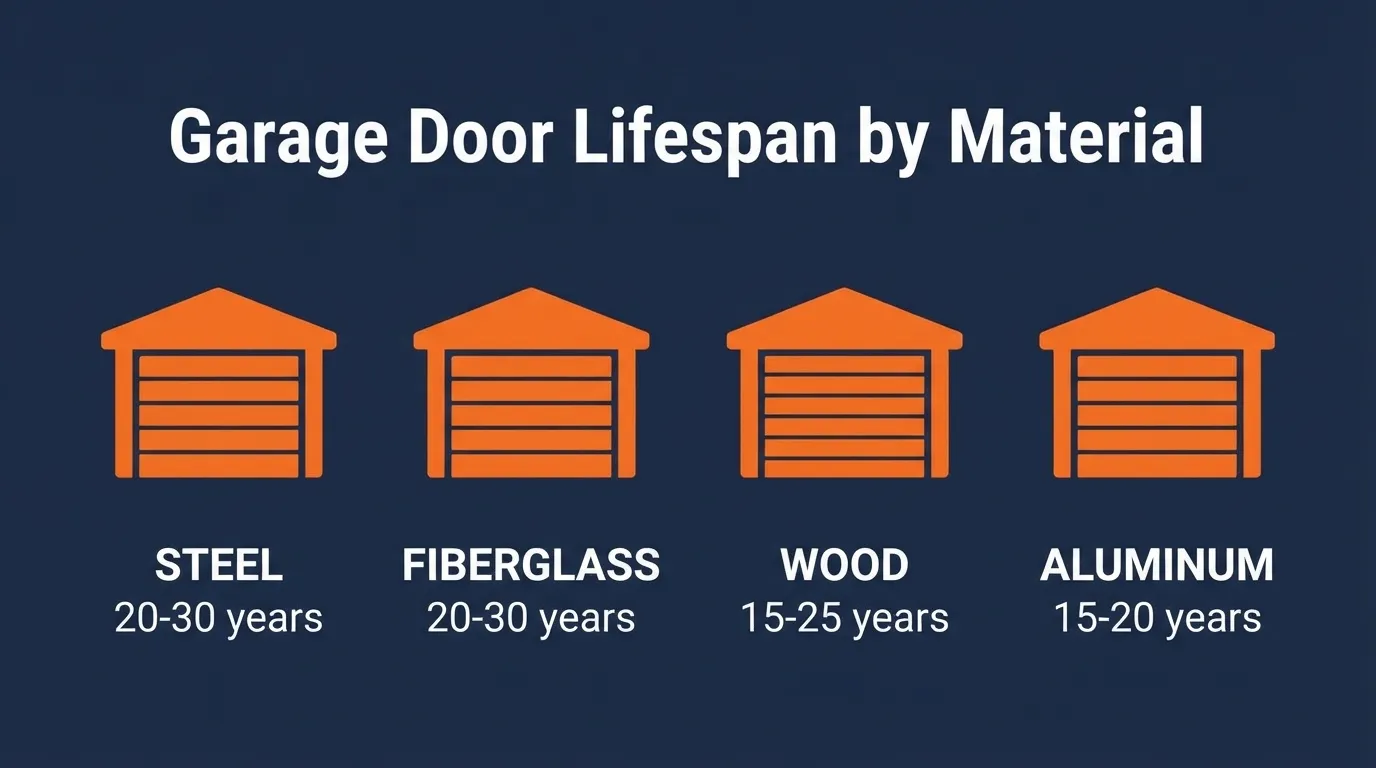
Garage door lifespan depends heavily on material, ranging from about 15 years on the shorter end to 30 years or more for the most durable options. Steel and fiberglass tend to last the longest, wood falls in the middle depending on maintenance, and aluminum varies the most depending on quality. Here’s a full breakdown by material, plus what actually moves your door toward the low or high end of its range.
Average Garage Door Lifespan by Material
| Material | Average Lifespan |
|---|---|
| Steel | 20 to 30 years |
| Fiberglass and Composite | 20 to 30 years |
| Wood | 15 to 25 years with maintenance |
| Aluminum | 15 to 20 years |
These figures represent the average garage door lifespan under normal residential use. A well maintained door often lands at the higher end of its range, while a neglected one falls short even in a mild climate.
Why the Numbers Vary So Much
If you’ve researched garage door lifespan before, you’ve probably noticed different sources give different ranges for the same material. That’s not inconsistency for no reason. It comes down to four real variables.
Build quality within a material category varies significantly. A budget steel door and a premium insulated steel door aren’t built to the same standard, even though both are technically steel. Climate severity matters too, a dry moderate climate is far gentler on any material than one with real freeze thaw cycles. Usage frequency plays a role, a door opened ten times a day wears differently than one opened twice. And maintenance history is often the biggest swing factor of all, the same door can last 15 years or 28 years depending almost entirely on whether it was properly cared for.
What Actually Affects Your Door’s Lifespan
Beyond material choice itself, a handful of factors consistently push a door toward the low or high end of its expected range.
Climate exposure. Repeated freeze thaw cycles, humidity, and direct sun all accelerate wear, particularly on wood and lower grade steel.
Maintenance frequency. Regular lubrication, hardware checks, and prompt repairs consistently extend lifespan across every material.
Usage patterns. A door used multiple times daily accumulates wear faster than one used occasionally, affecting hardware and moving components more than the panel material itself.
Initial installation quality. A door installed correctly, with proper balance and alignment, experiences far less strain over time than one that was rushed or misaligned from day one.
It’s Not Just the Door
Garage door lifespan isn’t only about the panel material. The system includes several components that wear out on their own timelines, often well before the door itself needs replacing.
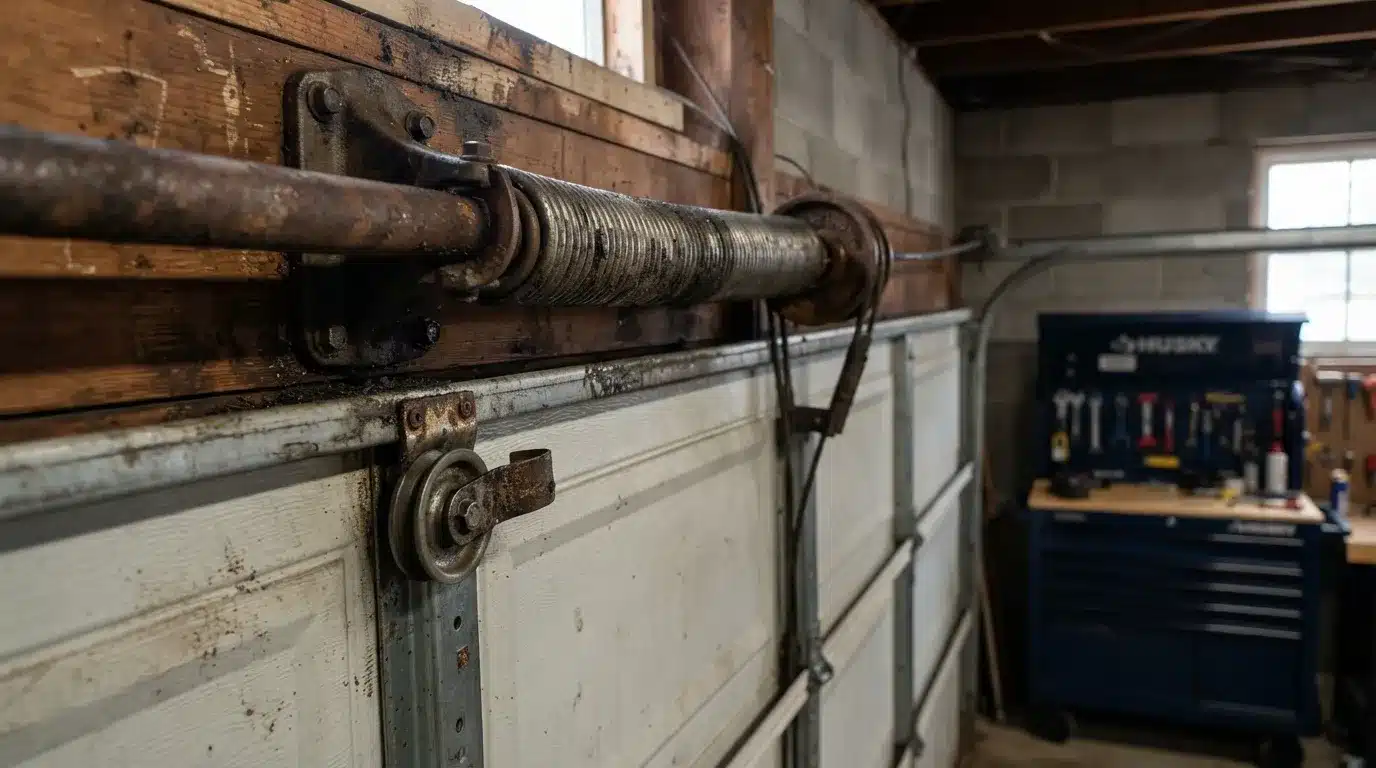
Springs typically last 10,000 to 20,000 cycles, which translates to roughly 7 to 14 years depending on how often the door is used. If you’re noticing signs of wear, our guide on signs you need garage door spring repair covers what to look for before a full failure. Openers generally last 10 to 15 years, and rollers vary from 5 to 12 years depending on whether they’re steel or nylon.
This means a steel door with a 25 year expected lifespan will very likely need at least one spring replacement and possibly a new opener along the way. Thinking about your garage door as a system, not just a panel, gives a more realistic picture of long term costs.
Garage Door Lifespan in Michiana
Local climate shifts these averages in a predictable direction. In an area like South Bend and the surrounding Michiana region, repeated freeze thaw cycles push wood doors toward the lower end of their range unless maintenance is kept up consistently. Steel, fiberglass, and composite doors tend to hold up closer to their higher end estimates here, since they don’t absorb moisture the way wood does.
If you’re deciding between materials with our climate specifically in mind, our comparison of wood vs steel garage doors goes deeper into how each material performs through a real Midwest winter.
Signs Your Garage Door Is Nearing the End
A few signs suggest a door is approaching the end of its useful life rather than needing another repair.
Frequent, recurring repairs across different components in a short period, visible warping or rust that affects structural panels rather than just cosmetic wear, and a door that no longer stays balanced even after adjustment are all signs worth taking seriously. At that point, according to guidance from the Door and Access Systems Manufacturers Association, replacement often becomes more cost effective than continued repair, particularly once a door is regularly needing attention to multiple systems at once.
Frequently Asked Questions
How long do steel garage doors last?
Steel garage doors typically last 20 to 30 years with proper maintenance, making them one of the longest lasting material options available.
Do wood garage doors last as long as steel?
Generally not. Wood doors typically last 15 to 25 years and require more consistent maintenance to reach the higher end of that range, especially in climates with significant temperature swings.
What shortens a garage door’s lifespan the most?
Inconsistent maintenance and harsh climate exposure are the two biggest factors. A door that’s rarely inspected or lubricated will wear out significantly faster than an identical door that receives regular care, regardless of material.
Conclusion
Garage door lifespan varies meaningfully by material, but the material alone doesn’t tell the whole story. Climate, maintenance, and usage all play a real role in whether your door lands at the low or high end of its expected range. Thinking about the door as a full system, including springs, opener, and rollers, gives a more accurate picture than focusing on the panel material alone. If your door is showing signs of wear or you’re weighing repair against replacement, our team can help you figure out which option makes the most sense.