
Best Insulated Garage Doors for Michiana Winters
By the team at South Bend Garage Door Repair | Updated 2026
Reviewed by Mike Harrington, Lead Garage Door Technician at South Bend Garage Door Repair.
Mike has over 14 years of field experience servicing Genie, LiftMaster, and Chamberlain garage door systems across St. Joseph County and the surrounding Michiana area.
Table of Contents
- What R-Value Do You Actually Need
- Polystyrene vs Polyurethane Insulation
- Why Insulation Matters More Than You’d Think
- Best Insulated Garage Doors for Michiana Winters
- How Much Does an Insulated Garage Door Cost
- Insulated Garage Doors with Windows
- Insulated Garage Door Pros and Cons
- Frequently Asked Questions
For a genuinely cold winter climate, the best insulated garage doors carry an R-value of at least R-12, using polyurethane insulation rather than polystyrene. Anything lower will still help, but it won’t hold up the way a true harsh winter demands. This guide explains what that number actually means, what level of insulation makes sense for our area specifically, and what it costs to get there.
What R-Value Do You Actually Need
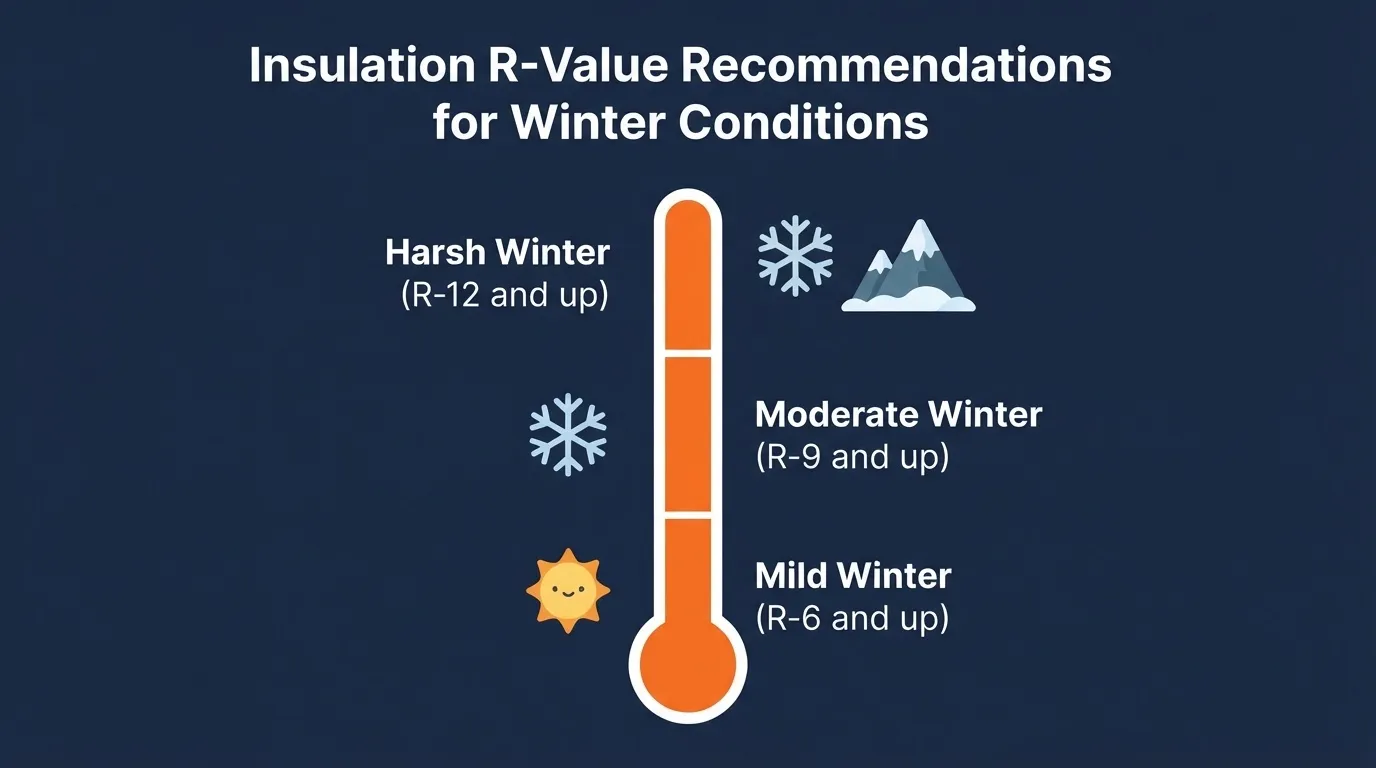
R-value measures how well a material resists heat flow. The higher the number, the better the door keeps outside temperature from affecting your garage. Most buying guides list R-value ranges without telling you what number actually matters for your situation, so here’s a practical breakdown.
| Climate Type | Recommended R-Value | Why |
|---|---|---|
| Mild, rarely below freezing | R-6 or higher | Basic polystyrene is usually enough |
| Moderate, some cold weeks | R-9 or higher | Handles occasional cold snaps well |
| Harsh winter, like Michiana | R-12 or higher | Sustained freezing temperatures need real thermal resistance |
If you’re specifically searching for the best insulated garage doors and you live somewhere with real winters, treat R-12 as your floor, not your ceiling. Doors reaching R-16 to R-20 exist and perform even better, but R-12 is the point where insulation starts genuinely earning its cost in a climate like ours.
Polystyrene vs Polyurethane Insulation
Almost every insulated garage door uses one of two insulation types, and the difference matters more than most buying guides explain.
Polystyrene is rigid foam board, typically sandwiched between steel layers or backed with vinyl. It’s the more budget friendly option, generally landing in the R-6 to R-9 range. It does a reasonable job for moderate climates but has visible gaps at the panel seams where heat can still pass through.
Polyurethane is injected as a liquid foam that expands to fill the entire cavity inside the door panel, bonding directly to both the interior and exterior surfaces. This creates a single, solid insulation layer with no gaps, which is why polyurethane doors consistently reach higher R-values, often R-12 and above, sometimes into the high teens or low twenties depending on the manufacturer.
Polyurethane also adds real structural strength to the door, which means better dent resistance and quieter operation as a side benefit. For a harsh winter climate, polyurethane is worth the extra upfront cost in almost every case.
Why Insulation Matters More Than You’d Think
A garage door is essentially another wall of your home, just a much larger and less insulated one if you choose poorly. A properly insulated garage door can keep the garage 10 to 20 degrees warmer than the outside temperature during winter, which matters for more than just comfort.
That temperature difference protects anything stored in the garage, including vehicles, from extreme cold. It reduces the temperature swing that any adjoining wall or room has to deal with, which matters a lot if your garage is attached to living space. According to the American Society of Heating, Refrigerating and Air-Conditioning Engineers, garages function as part of a home’s broader thermal envelope, meaning poor insulation anywhere along that envelope, including the garage door, can affect energy performance throughout the house.
Best Insulated Garage Doors for Michiana Winters
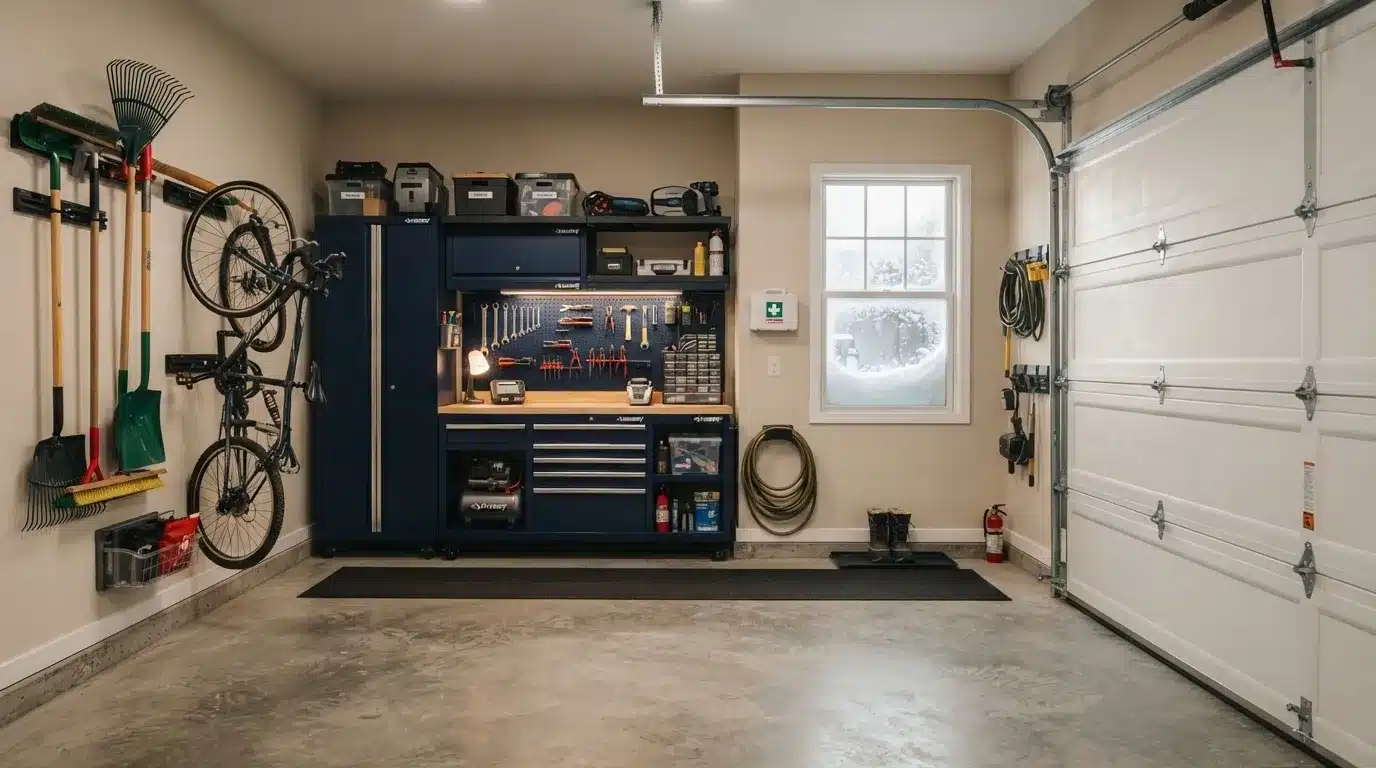
South Bend and the surrounding Michiana area see genuine freeze thaw cycles every winter, with stretches of sustained below-freezing temperatures. This is exactly the kind of climate where the difference between R-6 and R-12 becomes noticeable, not just on paper.
In a milder climate, a basic polystyrene door might be perfectly adequate. Here, it’s a compromise that shows up as a colder garage, higher heating costs if the garage is attached, and more strain on anything mechanical stored inside during the coldest weeks of the year.
For homeowners in our area, we generally recommend polyurethane insulated steel doors reaching at least R-12, and ideally higher for an attached garage. This also connects to the material choice itself. Our guide on wood vs steel garage doors covers why steel already tends to outperform wood in this climate, and pairing steel with strong polyurethane insulation gives you the most complete cold weather performance available.
How Much Does an Insulated Garage Door Cost
Insulation level has a direct, predictable effect on price. Here’s a general breakdown for a standard two car door.
| Insulation Level | R-Value | Typical Cost (Two Car) |
|---|---|---|
| Non-insulated | R-0 | $1,500 to $3,000 |
| Polystyrene insulated | R-6 to R-9 | $2,500 to $4,500 |
| Polyurethane insulated | R-12 to R-18+ | $3,500 to $8,000 |
The jump from polystyrene to polyurethane typically adds $1,000 to $2,500 to the overall cost, depending on size and additional features. For a Michiana winter, that difference tends to pay for itself over time through better energy efficiency and less strain on anything stored in the garage.
Insulated Garage Doors with Windows
Windows add natural light and curb appeal, but they do come with a small insulation tradeoff. Glass, even insulated glass, generally has a lower R-value than the solid insulated panel around it, so a door with a large window section will have a slightly lower average R-value than the same door without windows.
This doesn’t mean windows should be off the table. Look for doors with double pane or insulated glass options, and keep window sections reasonably sized relative to the overall door if maximizing winter performance is your top priority. Many manufacturers now offer insulated glass specifically designed to minimize this tradeoff.
Insulated Garage Door Pros and Cons
Pros:
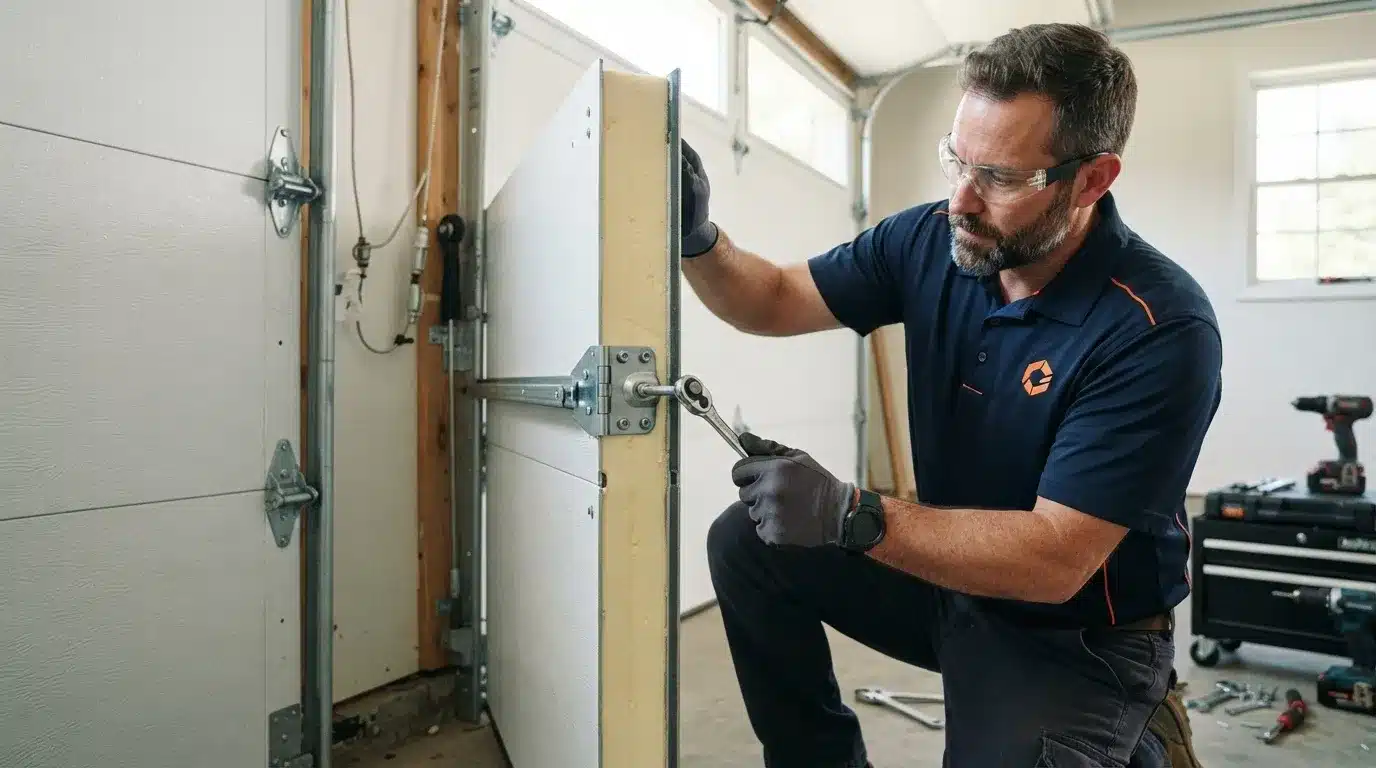
Better temperature control for the garage and any attached rooms. Added structural strength and dent resistance, especially with polyurethane. Noticeably quieter operation. Better protection for stored vehicles and belongings during extreme cold.
Cons:
Higher upfront cost compared to a non-insulated door. Slightly heavier, which can mean more strain on an older or weaker opener. Diminishing returns if your garage isn’t otherwise sealed well, gaps around the frame or a worn weather seal can undercut even a high R-value door.
For most homeowners in a genuinely cold climate, the pros outweigh the cons clearly enough that insulation is worth prioritizing over other features when budget is limited.
Frequently Asked Questions
What R-value is good for a garage door?
For mild climates, R-6 or higher is usually sufficient. For harsh winter climates like Michiana, R-12 or higher is a better target, with polyurethane insulation reaching R-16 to R-20 offering even stronger performance.
Are insulated garage doors worth the extra cost?
Yes, especially in cold climates. The added cost typically pays off through better temperature control, protection for stored items, and reduced strain on an attached home’s heating system.
How much does a 2 car insulated garage door cost?
A polystyrene insulated two car door typically runs $2,500 to $4,500, while a polyurethane insulated door with a higher R-value runs $3,500 to $8,000 depending on size and features.
Do insulated garage doors with windows lose efficiency?
Slightly. Window sections generally have a lower R-value than solid insulated panels, but choosing insulated glass and reasonably sized window sections keeps this tradeoff small.
Conclusion
The best insulated garage doors for a climate like Michiana’s combine polyurethane insulation with an R-value of at least R-12, paired with a durable material like steel. That combination genuinely earns its cost over a real winter, protecting your garage, anything stored inside it, and potentially the rest of your home if the garage is attached. If you’re ready to explore insulated options for your home, our garage door installation team can help you find the right R-value and material combination for your budget.